
ARTICLE · FPV IN PRACTICE
An FPV Camera Is a Consumable. Poor Image Quality Should Not Be Normal
An FPV drone is not built for decades of service. When you are building dozens or hundreds of aircraft, every component has a cost and the budget matters. The camera is no exception.
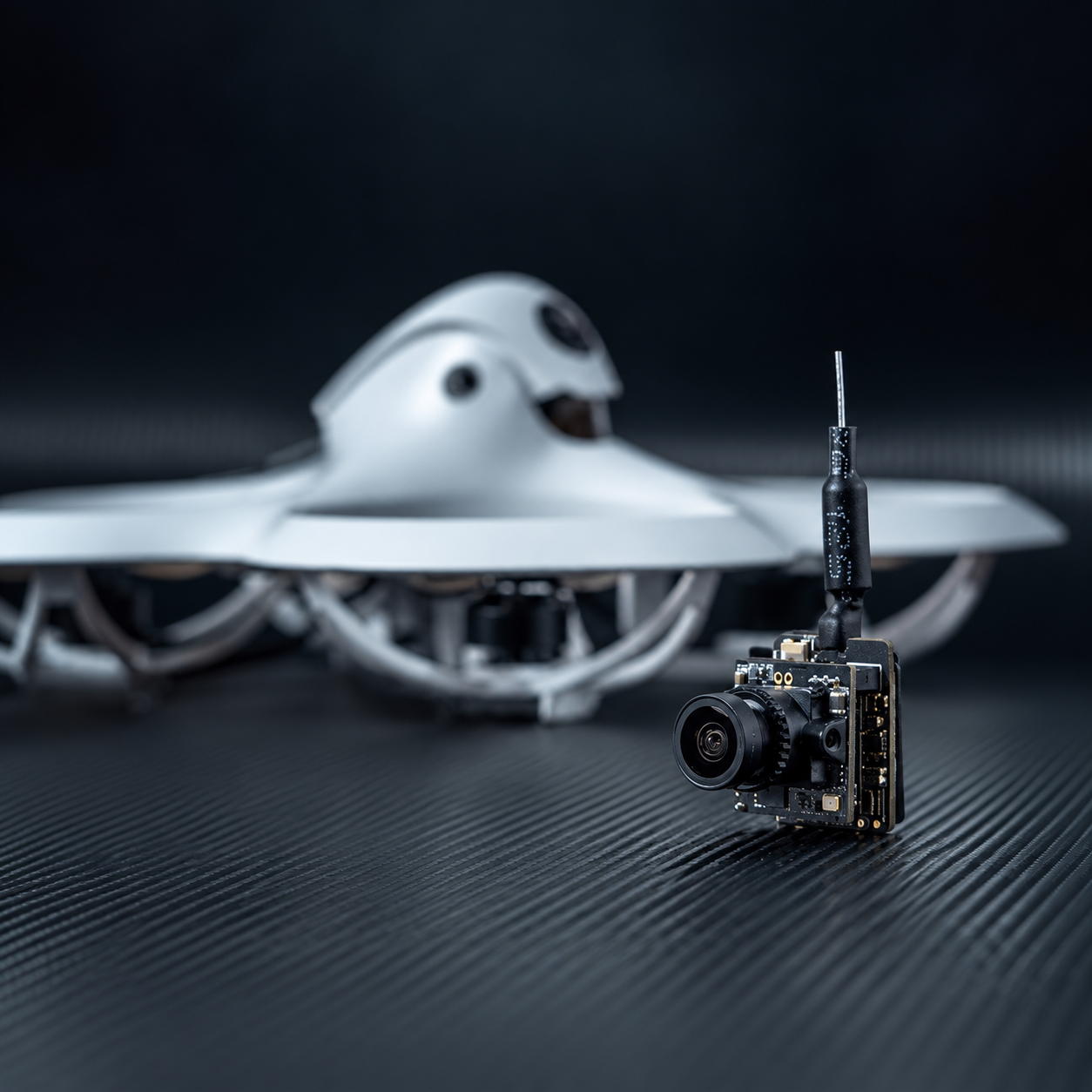
Not every aircraft needs the most expensive model. But saving money should not compromise the image the pilot relies on.
For a batch choice, consider more than unit price: check the specific model’s compatibility, lighting conditions and image in your own system.
A camera can be a consumable. Poor image quality should not become the norm.
The Pilot Sees What the Camera Sends
In bright daylight, differences between cameras may be less noticeable.
More demanding conditions reveal bright sky and dark ground in one frame, sudden changes in lighting, dusk, shadows, noise, lost detail or incorrect focus. Compare the actual image in the conditions where the camera will be used.
TVL describes detail in an analogue signal, not low-light sensitivity. The TVL guide separates these criteria; lines, ripple or signal loss are covered in the troubleshooting guide.
For more on changing light throughout the day, see «As Daylight Fades: Choosing an FPV Camera for Changing Light».
“Consumable” Does Not Mean “Anything Will Do”
In a production build, it makes sense to account for every component. A difference of several hundred hryvnias per camera adds up when buying hundreds. More affordable cameras can therefore make sense.
A low price does not justify an image that fails the task. A camera can be affordable, but it still needs to work properly in a specific build.
For a batch, balance the budget against image requirements. Do not pay for features your use case does not need, but do not choose a model whose image is unsuitable.
It Is Reasonable Not to Overpay
A more expensive model may offer features that a particular task does not need.
Not only: “Which camera is the most expensive?”
And not just: “Which camera is the cheapest?”
Ask instead: “What image quality is enough for my task, and which camera can provide it consistently?”
If a more affordable model suits the operating conditions, there is no reason to pay more solely for a brand or unnecessary specifications.
Describe the lighting, operating conditions, required quantity and image requirements. This will clarify which models to compare.
Savings Still Need to Make Sense
The cheapest camera is no longer a good deal if it brings ongoing problems. Potential risks include unstable images, excessive noise, focus issues, poor performance as lighting changes, or noticeable variation between units.
These risks do not apply to every affordable camera, so assess the specific model rather than its price alone.
Check the image in conditions close to your own. Blur may be related to focus, which can sometimes be adjusted by turning the lens.
100 Cameras Are Not Just 100 Separate Purchases
With one camera, you can assess that individual unit. For a production order, consistency, pre-shipment checks and a clear process for actual defects matter more.
Before placing a batch order, ask whether cameras are checked before shipping and how a confirmed structural defect is handled separately from a focus issue.
Practical checks before a wholesale order are covered in the guide to preparing an FPV camera for a large order.
PRACTICAL SELECTION
What Matters in Practice
Before ordering, match the model to the operating conditions and quantity, and clarify the inspection process.
- Operating conditionsDaylight, dusk and changing light place different demands on a camera.
- Bright and dark areasIf a frame contains a bright sky and darker ground, assess the actual image, not TVL alone.
- QuantityChoosing one camera differs from selecting for a production batch.
- Pre-shipment checksFor a large delivery, camera inspection is a separate part of the selection process.
An Affordable Camera Can Be the Right Choice
The PRBZ Mini 1800TVL, manufactured by FLTX, can be assessed for a production order using its confirmed specifications, compatibility and image under the intended conditions.
The final choice depends on operating conditions, quantity and budget. Check the confirmed specifications for the model.
A Consumable Component Still Has to Do Its Job
While installed on an aircraft, the camera needs to provide an image adequate for the task. This does not require the most expensive model, but it does require choosing for the specific use.
An FPV camera may be a consumable component. Image quality should not be.
Need help? Contact FPV Vision.